
New Product Strategy
Background
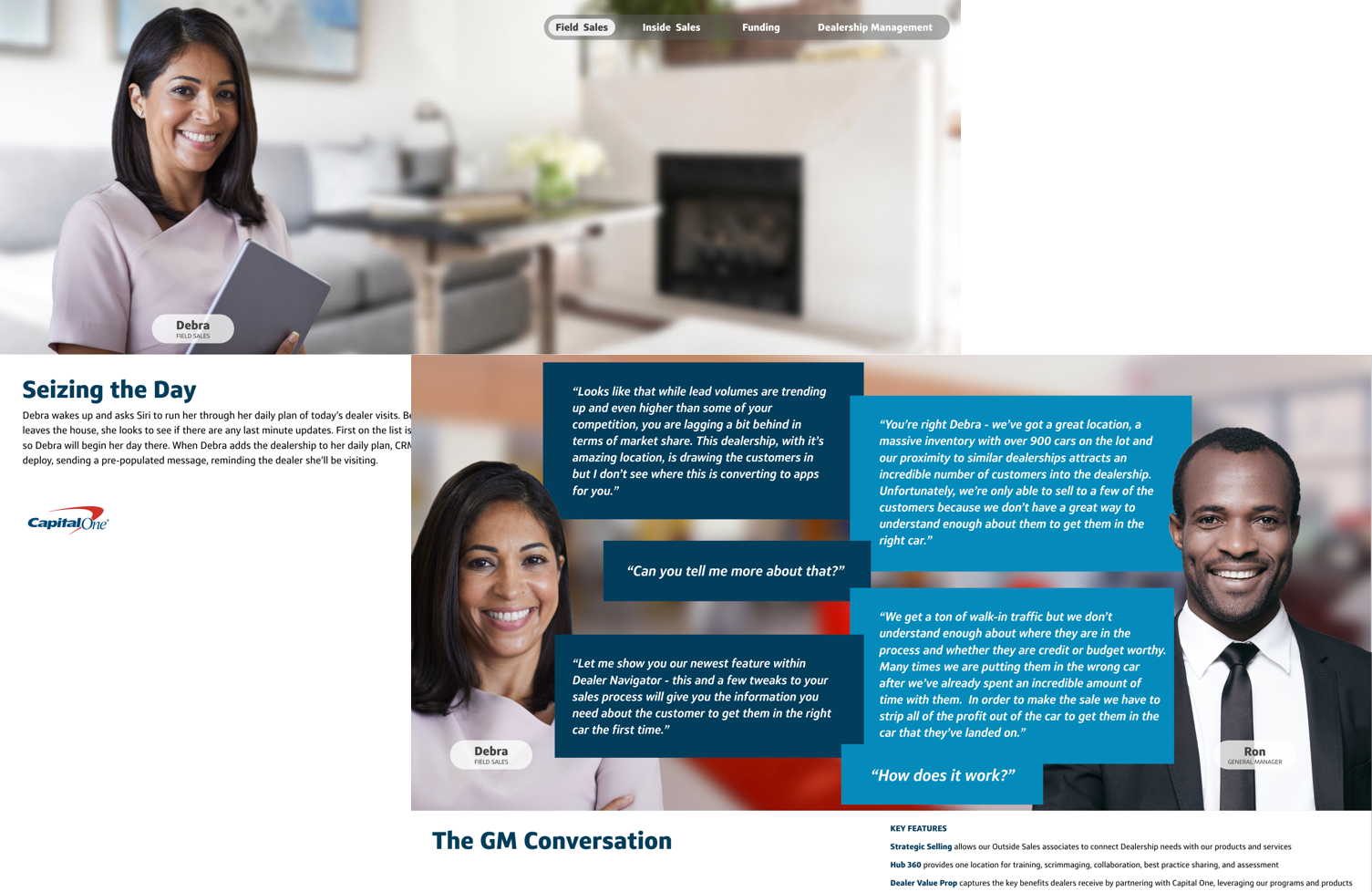
The Capital One Auto Finance sales team uses Salesforce for data and information. In the mornings, before they leave their homes, sales associates review their dealer metrics to help determine their route for the day.
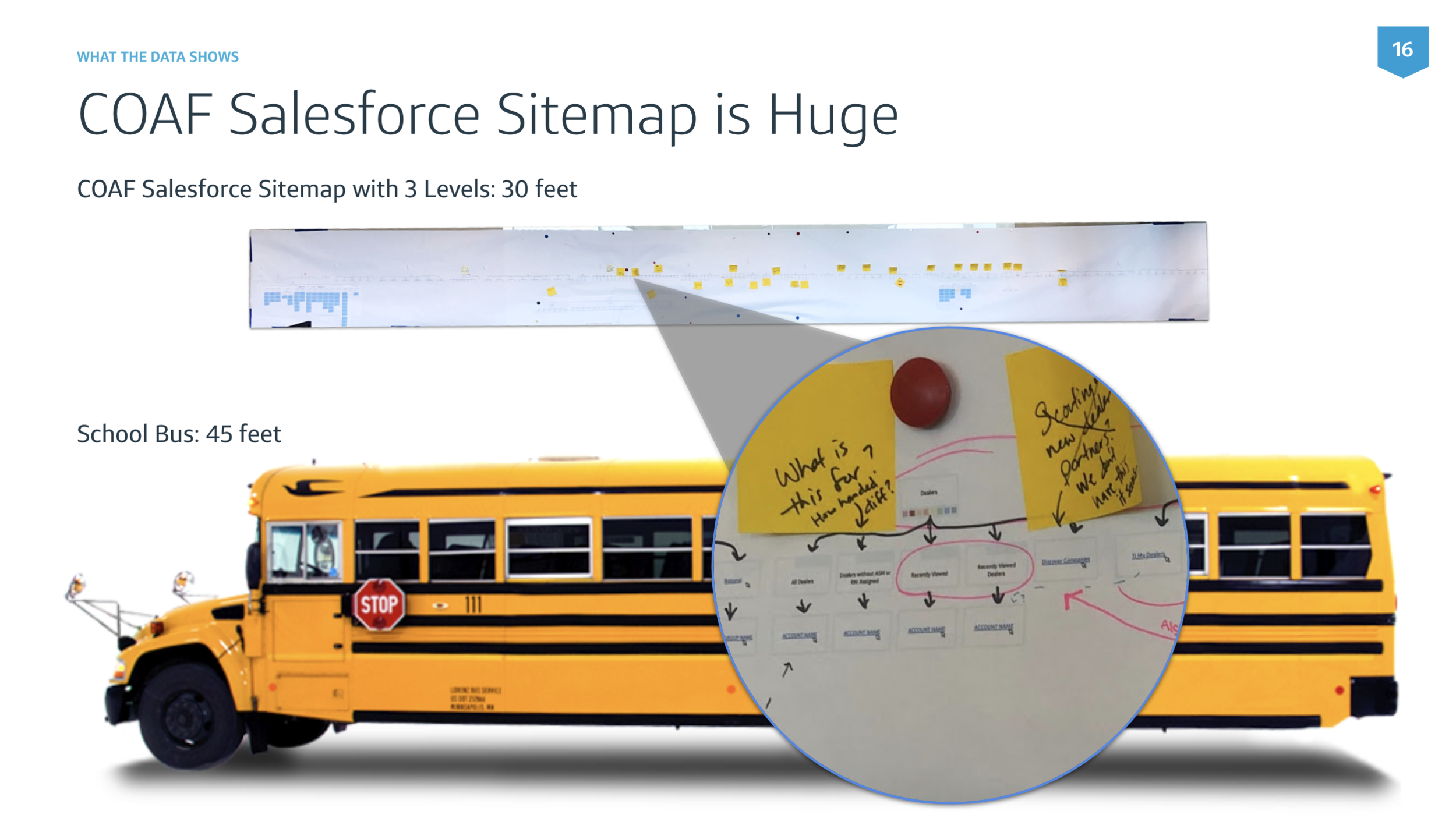
Our instance launched in 2015 with a few pages and reports to help the sales team make decisions, but it quickly blew up with requests for more data. By the time I joined the team, the site had 38 L1 pages. After documenting and printing the 30 foot sitemap, stakeholders quickly signed off on the prioritization of this work.
RolE
Lead design and research
Team Members
Yvonne Zagumny (Product), Digvijay Singh (Development)

RESEARCH
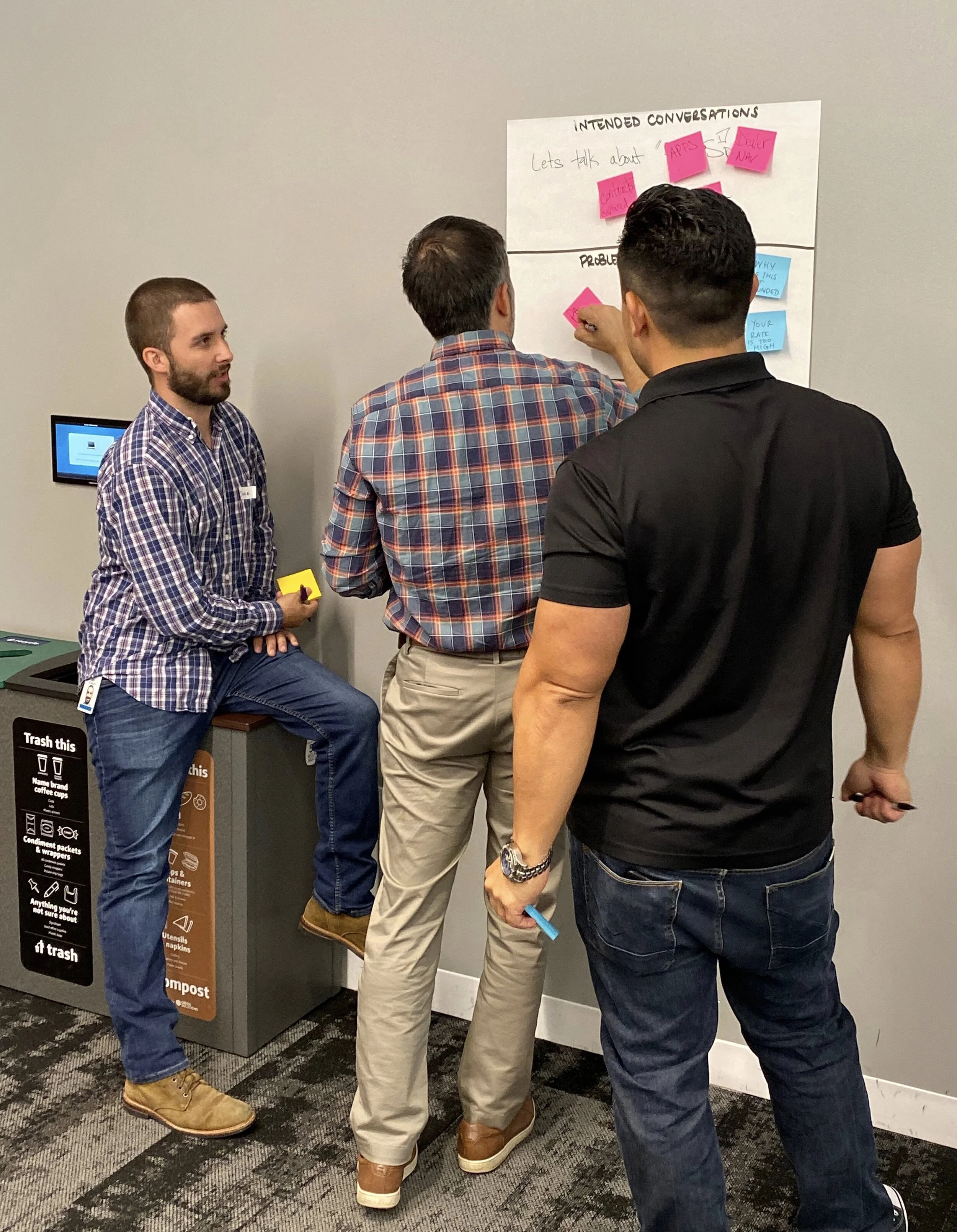
To understand what information was important, I had to better understand what the sales team did. I joined the associates on the road, attended their training courses, and called them between dealerships.
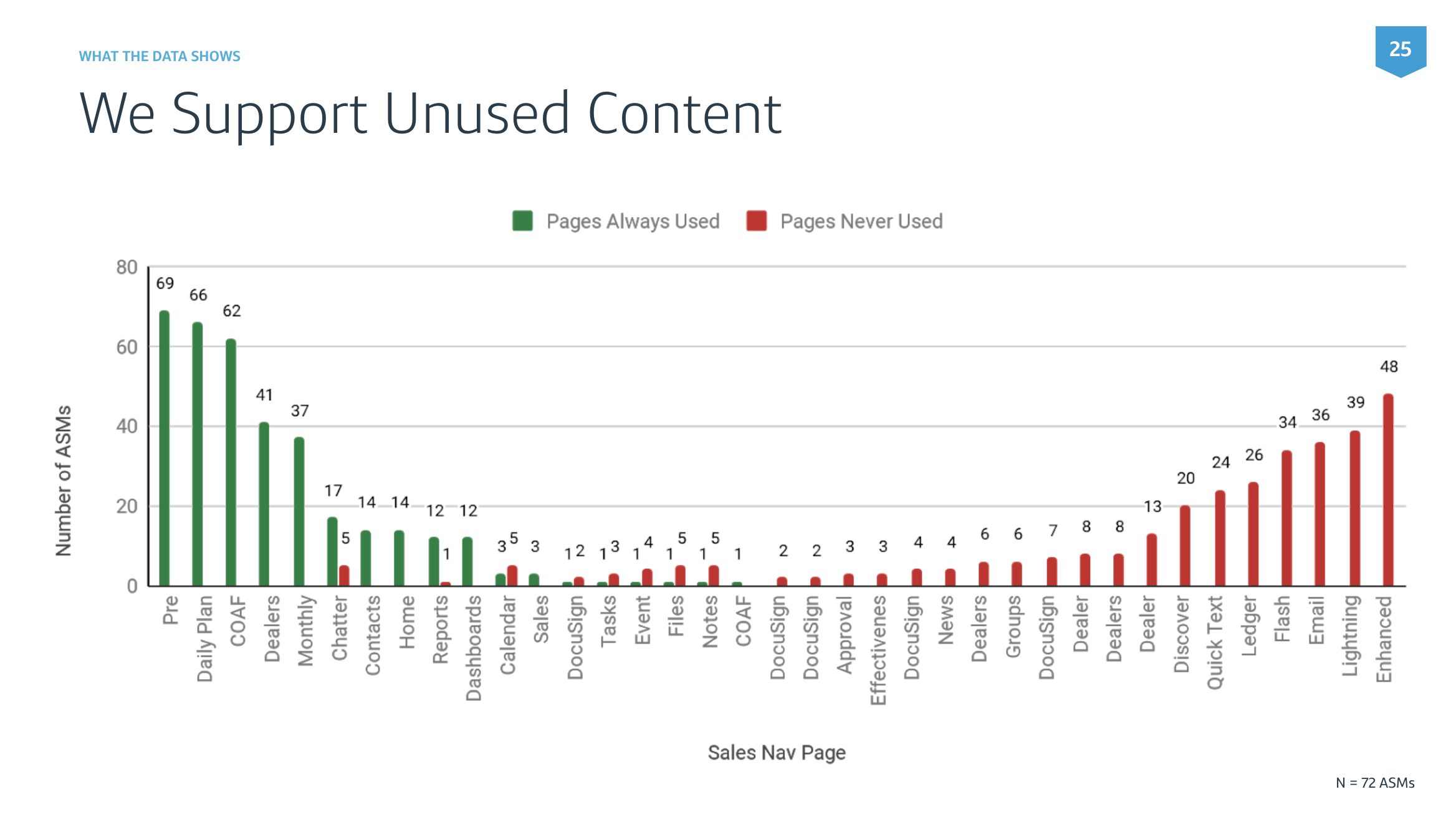
I hit a speed bump in my research, when I found out we didn’t have any usage metrics for the site. As a proxy, I surveyed sales associates for their usage. Though self reported usage is not the ideal quantitative metric, over 70 associates responded to the survey and gave us beautiful sloping in the results.
The team now has complete site tagging in the tech backlog and tagging as a part of our definition of done.
iteration
With access to our customer readily available, iteration is the time to play! At this point, architecture refresh may be the goal of the work, but that usually doesn’t make a lot of sense to customers. I prepared for our conversations with paper prototypes - brief explanations with pen and paper of what information is shown. With the associate, we may edit or codesign the prototypes.
After one research session, I reorganize and regroup information back to an architecture state to prepare for the next session.
By the end of iteration, I have a good idea of how to best group information and what our architecture may look like.
Designing - Step 1
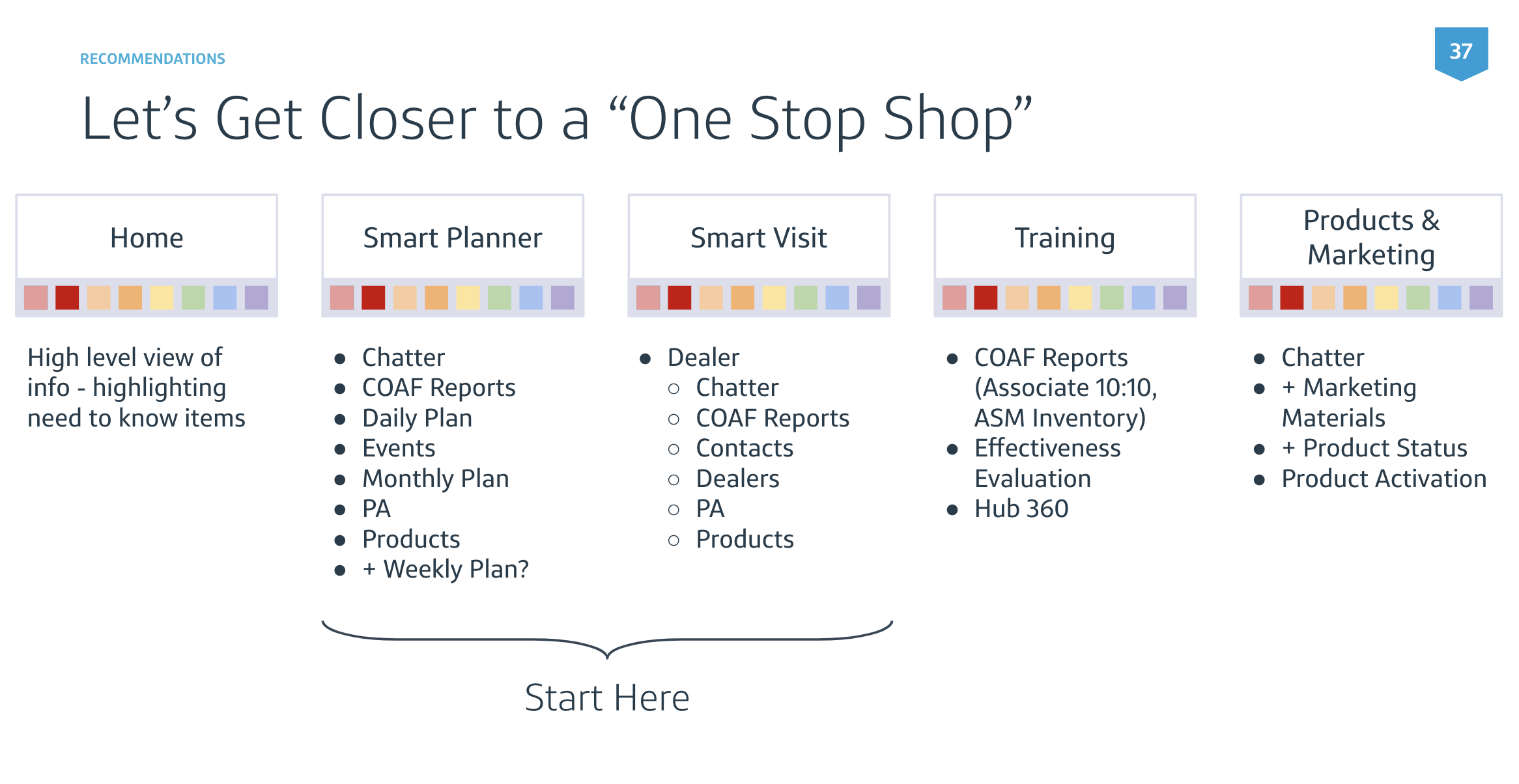
Unfortunately, since all the information was isolated on individual pages, we can’t just move to our target state. Step one of our redesign is to prioritize the work.
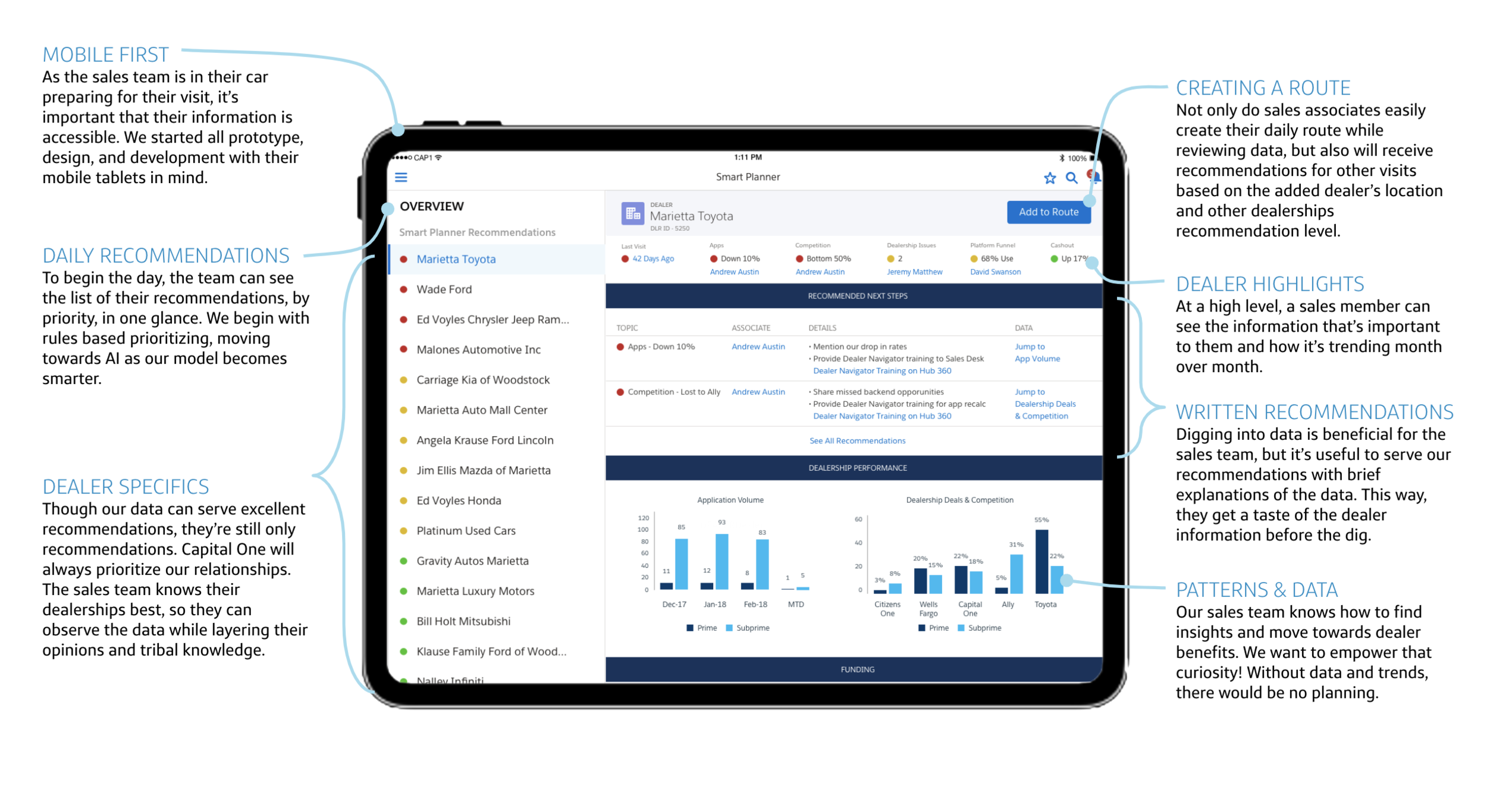
During our vision sessions, our team saw a world where sales associates wouldn’t have to do all the digging to plan their day, but recommended dealers to visit. We prioritized this piece.
I pulled pieces from our previous research and iteration to inform designs. Again, I went through iterations with our customer. Iteration in this round specifically focused on card sorting with information - what is important to see first on the page AND what information bubbles that dealer to the top of the list.
Because we don’t yet have the data to model with AI, creating these rules was important. I hypothesize these rules will change after role out and be different by each region. Even with Salesforce’s Einstein component, our work might shift dramatically.
Whatever the case, we have a confident first design ready for pilot once our development team is ready to run!
“Maegan’s strongest characteristic is her resolve. She is always looking for the customer-back reason for doing something and has had an extremely strong start in a very difficult and uncompromising space. She always finds ways to flex where things are structured and ways to create definition where things are not clear. ”